

Neck pain can make everyday activities surprisingly difficult. Turning your head while driving, looking down at your phone, sitting through a workday, or getting comfortable at night can all become uncomfortable when your neck feels stiff or painful.
For some people, the discomfort may also travel into the shoulders or arms, particularly when a nerve in the cervical spine is irritated.
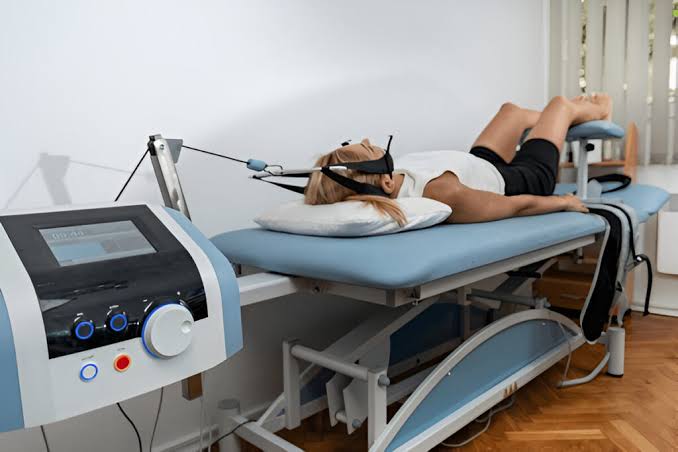
One treatment that may be recommended as part of physical therapy is a cervical traction device. Cervical traction uses a gentle, controlled pulling force to stretch the neck and create space between the vertebrae. Depending on the underlying condition, this may help reduce pressure and ease certain neck-related symptoms.
But can traction actually help your neck pain? And is using a device at home always the right choice?
Let’s take a closer look.
What Is Cervical Traction?
Cervical traction is a treatment technique designed to gently stretch the cervical spine. It can be performed manually by a physical therapist or mechanically using specialized equipment.
The goal is to create gentle separation between the vertebrae, which may reduce pressure around certain structures in the neck. Cervical traction may be used for some people experiencing neck pain, stiffness, or symptoms related to irritated nerves.
However, traction isn’t appropriate for every type of neck pain. The cause of your symptoms matters.
That’s why a professional evaluation should come before deciding whether traction is right for you.
What Causes Neck Pain?
Neck pain can develop for many different reasons. Some common causes include:
- Poor posture
- Muscle strain or tension
- Repetitive movements
- Sports or other injuries
- Age-related changes in the cervical spine
- Herniated discs
- Pinched nerves
- Cervical spondylosis
The symptoms can also vary significantly. One person may experience localized stiffness, while another may have pain travelling toward the shoulder or arm, along with tingling or numbness.
Understanding what’s causing your symptoms is an important part of choosing the right treatment.
How Does a Cervical Traction Device Work?
A cervical traction device applies controlled traction to the neck rather than requiring you to actively stretch the area yourself.
The gentle pulling force is intended to create more space between cervical vertebrae. For certain conditions, this may temporarily reduce pressure on irritated structures and help improve comfort or movement.
There are different approaches to cervical traction.
Manual Cervical Traction
With manual traction, a trained physical therapist uses their hands to apply a gentle, controlled force to the patient’s head and neck.
One advantage is that the therapist can adjust the technique based on your symptoms and response during treatment.
Mechanical Cervical Traction
Mechanical traction uses specialized equipment to apply a controlled pulling force.
The amount and duration of traction can be adjusted based on the individual’s condition and treatment goals. A physical therapist can determine whether this approach is appropriate for you.
Can a Cervical Traction Device Actually Relieve Neck Pain?
It can help some people, but the answer depends largely on what is causing the neck pain.
Cervical traction may provide symptom relief for certain conditions, including some cases involving irritated or compressed nerves. It may also be used alongside other physical therapy interventions to improve mobility and function.
For example, someone with cervical radiculopathy may experience pain, numbness, or tingling extending from the neck toward the shoulder or arm because a nerve root is irritated or compressed.
In these situations, traction may be one part of a broader treatment plan. Physical therapy may also involve strengthening, mobility exercises, stretching, posture education, and movement retraining.
The important point is that traction should generally be viewed as one treatment tool rather than the entire treatment plan.
Should You Use a Traction Device at Home?
Seeing a traction device online and assuming it will solve your neck pain can be tempting.
However, neck pain has many possible causes, and traction isn’t appropriate for everyone. Using too much force or using a device when traction isn’t suitable for your condition could potentially make symptoms worse.
That’s why it’s a good idea to speak with a healthcare professional before beginning cervical traction at home.
A professional assessment can help answer a more important question:
What is causing my neck pain, and what treatment is appropriate for me?
If you experience new or worsening pain, numbness, tingling, weakness, or other unusual symptoms, don’t simply increase the amount of traction you’re using. Get your symptoms evaluated.
What Can Physical Therapy Add to Cervical Traction?
Traction may help with certain symptoms, but long-term improvement often involves addressing the factors contributing to your neck problem.
That’s where physical therapy can make a difference.
Depending on your condition, a personalized treatment plan may include:
- Therapeutic exercises
- Neck and upper-back strengthening
- Mobility exercises
- Stretching
- Manual therapy
- Postural education
- Movement retraining
- Cervical traction when appropriate
For example, if long hours at a desk are contributing to your neck discomfort, using traction alone may not address the posture, strength, or movement habits that continue to place stress on the area.
A physical therapist can look at the bigger picture and develop a treatment plan around your specific needs.
When Should You See a Physical Therapist for Neck Pain?
Occasional neck stiffness may improve with appropriate movement and self-care. But if your symptoms persist, keep returning, or interfere with your daily activities, getting evaluated can be worthwhile.
Consider speaking with a physical therapist if you experience:
- Persistent neck pain
- Limited neck movement
- Pain travelling into your shoulder or arm
- Numbness or tingling
- Arm or hand weakness
- Pain that interferes with sleep
- Difficulty working, exercising, or performing everyday activities
An evaluation can help determine whether your symptoms may respond to conservative treatment and whether cervical traction should be included in your care plan.
Looking for Neck Pain Treatment in Kendall Park, NJ?
If you’re searching for physical therapy in Kendall Park, New Jersey, Innovative Physical Therapy and Fitness Center provides personalized physical therapy care for a range of musculoskeletal conditions.
The Kendall Park clinic is located at 3562 NJ-27, Suite 124, Kendall Park, NJ. Instead of assuming that every neck problem requires the same treatment, the team can evaluate your symptoms and help determine which treatment options may be appropriate for your condition.
If cervical traction is suitable for you, it can be incorporated into a broader rehabilitation plan rather than being treated as a standalone solution.
Don’t Let Neck Pain Keep You From Your Routine
Neck pain can affect much more than your neck. It can interfere with your work, sleep, exercise, driving, and ability to enjoy everyday activities.
A cervical traction device may provide relief for certain patients, but it’s important to understand that the right treatment depends on the cause of your symptoms.
If you’ve been dealing with persistent neck pain, don’t rely solely on an online device or try to guess at the cause. A professional evaluation can help you understand what’s happening and what steps may help.
If you’re in Kendall Park, NJ, Innovative Physical Therapy and Fitness Center can help you explore personalized physical therapy options for your neck pain.
Ready to take the next step?
Contact Innovative Physical Therapy and Fitness Center to schedule an evaluation and discuss whether physical therapy and cervical traction may be appropriate for your condition.
FAQS
1. Does a cervical traction device help with neck pain?
It may help certain people, particularly when neck pain is associated with specific cervical spine or nerve-related conditions. However, traction isn’t appropriate for every type of neck pain, so professional evaluation is recommended.
2. Can I use a cervical traction device at home?
Some people may be advised to use cervical traction at home, but it shouldn’t be started without professional guidance. A physical therapist or healthcare provider can determine whether it is appropriate and explain how it should be used.
3. Can cervical traction help a pinched nerve in the neck?
Cervical traction may be incorporated into treatment for certain cases of cervical nerve irritation or compression. However, the underlying cause and severity of the condition need to be assessed first.
4. Is cervical traction better than physical therapy?
Traction and physical therapy aren’t necessarily competing treatments. Traction may be one component of a physical therapy programme that also includes strengthening, mobility work, manual therapy, and movement education.
5. When should I see a physical therapist for neck pain?
Consider an evaluation if your neck pain persists, repeatedly returns, limits your movement, affects daily activities, or is accompanied by symptoms such as numbness, tingling, or weakness.